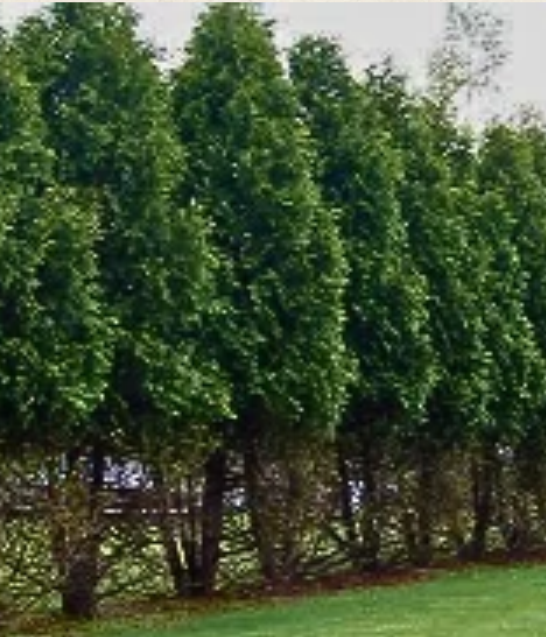
The story you are about to read is true; names are left out to protect identities. Our investigator set out on an early spring morning and reported the following crime scene: Lining a property, used as green fences, stood a large row of ‘Emerald Green’ Arborvitae, deer-browsed to the six-foot plant height, leaving only a knob of green at the top. Shocking. Our investigator looked in the back seat of her truck for crime scene tape, shaking her head.
There are at least Three! crimes leading to the main incident.
Crime #1: Wrong plant!
A wrong plant choice was made for the situation; the stage was set for deer invasion. The best solution is to start with choosing the right plant for the right location—whether this is for sun or soil condition, size, or in this case, deer in the neighborhood. Deer love most varieties of arborvitae and planting them is certain to bring them to your property like a hungry teenager to a buffet.
Crime #2: Missed opportunity…again?
A poor decision in plant care and non-reporting to get help. As soon as a plant violation occurs, whether it be deer browsing (like this case), insect damage, storm damage, etc., the best next defense is to protect plants from further and future damage. Crime prevention could happen with sprays to deter browsing deer. It can be quite effective when applied consistently and correctly. Homeowners need to decide if they are up for the task themselves or to hire a professional service.
Crime #3: An open door, uh oh..
As much as possible, don’t leave a door open to your landscape by planting things they like. In addition to browsing, deer also bring deer ticks, inviting potential for tick-born illnesses such as Lyme disease.
The Bottom Line
Plants and installations cost money, so the best solutions are also the most economical: start with great decisions.
Let’s find a solution.
What are, then, some good choices for perimeter plants that are deer resistant? If you have lots of bright sunshine, and well-draining soil, you have more choices than if you have shady areas, but there are available options for both!
For sunny spaces.
‘Green Giant’ arborvitae is one variety that is “deer-resistant, meaning deer do not typically eat them. This does not mean they never eat them; deer will browse even plants they don’t like in winter when they are starving. ‘Green Giant’ arborvitae grows much larger than the ‘Emerald Green’ variety, so a homeowner will need to evaluate the available space for planting, both in width and in height. ‘Jr. Giant’ is a smaller variety of ‘Green Giant’ that may work in areas where a shorter plant is needed.
Cryptomeria. ‘Yoshino’ is a great choice, with its bronze color in winter and attractive small cones.
Pines. Choose from our native white pine or among many Japanese varieties. These are striking plants with many different needle sizes and shades of green.
Spruces. Blue spruces are often used more as specimens, given their striking bright needles, but Serbian spruces make beautiful border evergreens while inviting birds and maintaining great winter interest.
For shady spaces.
American Holly. If the space is part sun, not deep shade, holly would be a good choice with its handsome leaf and berries.
Schip Laurels. Many people choose this plant for screening in shady areas. Schip Laurel is indeed a good choice for those shadier areas as long as the extra steps for plant health are followed. A good winter spray and some snow removal to help prevent branches from breaking under snow load and you are good to go!
Leather Leaf Viburnum. This very large shrub, while not the most attractive plant in the kingdom, will do the job when many other shrubs fall short. This plant is great to add into my favorite border strategy which is…
…a mixed planted border! Whether it is sunny or shady, you will have the most dynamic landscape if the border is a mix of evergreens and deciduous trees, large and small shrubs, grasses and perennials. You will have year-round color and interest, invite birds that help you manage insect pests (and sing you songs in the morning!) This mixed border will provide you with plenty of screening while adding beauty and curb appeal to your property.
Our experienced designers and horticulturalists can help you choose the right plants for your property, including designing a mixed border, customized for your space that will add beauty, long season interest and property value.