The story you are about to read is true; names are left out to protect identities. Our investigator, while driving between appointments, reports on today’s garden crime:
As a landscape design professional, and someone who tries to live using good environmental practices, I have come to love repurposed items. This includes patronizing thrift shops, yard sales, flea markets–anywhere I might find interesting or useful items, keeping them out of landfills and saving me a few bucks in the process.
This said, I also consider very thoughtfully the curation of what comes into the property with the same care as my closet. Space limits are the first gate; after all, the closet or garden doesn’t expand in size just because I see something I don’t think I can live without. Additionally, there is the reality of “too much of a good thing.”
Several years ago, driving down a country road between client visits, I hit the brakes as I came up to a tractor using the same road to get to a far field. Because of my reduced speed I had plenty of time to get an eye-full of my surroundings. And there was the crime scene: a semi-circular driveway lined with old bowling balls glued onto rebar stubs. The bowling balls were of varying sizes and ran the span of the rainbow in color. I applaud the execution, however, as they were all precisely upright, which spoke to at least purposeful, thoughtful, intention to the installation. Since they were not in a dedicated mulch or stone area, my landscape mind quickly turned to the unfortunate crewperson who would have to mow or string trim around these bowling balls or hit them with the snow blower. Just wow.
The tractor at last moved off the road onto the field; I zipped along on my way.
The Bottom Line
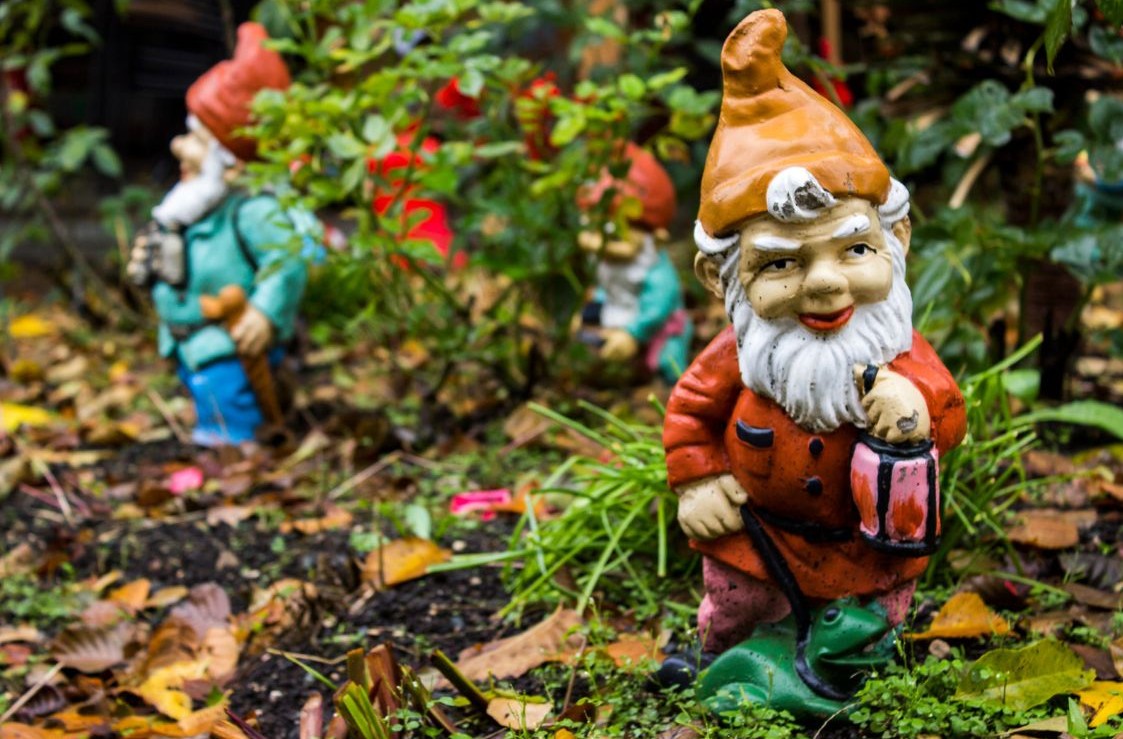
From a design standpoint, too many do-dads take the garden down the wrong path, so to speak. A garden or landscape ought not give the vibe of a carnival side show. Non-plant material should be kept to a minimum—one, or maybe two, non-plant items per plant bed area. Decorative items should be more of a focal point, a place for the eye to pause, not various items that will overwhelm garden spaces. Decorative items are accessories that support the design and aesthetic of the landscape area.
Let’s find a solution.
Instead of a bunch of tchotchkes, consider the following strong garden focal point accents:
- Obelisks. Not only are these beautiful vertical accents, adding a Clematis that will weave its way up gives a pop of vibrant late-spring color.
- Think about our bird friends. Birds help us to maintain our landscapes in a healthy way more than anything else. Inviting birds to our gardens help us manage pest insects while bringing color, motion, and song. We can accomplish this by not only planting for birds, but by supplementing plants with items that are decorative as well as purposeful–feeders, bird baths, and nesting boxes.
- Large statuary. Rather than a bunch of small items, go with one large item that’s special. Consider large, concrete sphere or steel rings that can frame views.
- Statement planters that are changed seasonally.
- Pillars with decorative gates between that create a threshold into a garden “room.”
- Pay attention to scale; large areas can support a large piece that would otherwise overwhelm a small area.